

A reader of my book Somatic Milonguero asked a great question: “I can imagine more experienced dancers trying the Paxton body exercises, but I can’t see clearly how would you start a class with complete beginners”
This question assumes the classroom model of teaching/learning—in the case of dance, the studio model. You know how it works: a teacher demonstrates, students copy, then practice through repetition (first individually, then with a partner), and finally the teacher goes around making corrections. It’s the demonstrate-drill-correct model, and it’s completely unnatural.
This model emerged in the 20th century, and now people are searching for alternatives because it has been genuinely harmful to human development. This applies to schooling generally, including learning to dance.
The Somatic Approach is Different
In my recent article Tango and Eastern Martial Arts, I mentioned that my focus is going to be primarily on movement learning and teaching, using the concept of ki or chi that I get from Steve Paxton. So it might look like I’m assuming that the standard Western teaching model is suitable—but I’m not.
The somatic approach doesn’t actually teach particular movements. The assumption in somatics is that we learn movement naturally. If people have trouble moving, it’s not that they need to “learn” movement—it’s that they failed to fully develop their movement skills, or perhaps they had them and forgot them.
The problem isn’t learning specific movements. It’s restarting or recovering the process of moving freely and in diverse ways.
Why Movement Freezes
People fail to naturally develop movement skills (or their movement freezes up) because they don’t move enough in everyday life. They don’t walk enough. They sit constantly—in cars, in offices, in schools. When they do walk, it’s on flat surfaces, not the complex terrain of a hiking trail where you’d move in varied and adaptive ways.
Traditional dance teaching just adds more of this unnatural pattern. You’re teaching movement that’s mechanical, which causes people to further forget their natural movement.
“Experienced” Students Have a Harder Problem
If you have experienced students, the problem is they’re experienced in the wrong thing. They’re experienced in mechanical movement. They need to forget all of that. Beginners are actually better off than so-called “experienced” students.
This includes you as a teacher. If you want to help people move naturally, you have to forget the idea that you’ll teach mechanical movements first and then somehow stick the somatic approach on top of that as a sort of bandaid. They’re mutually incompatible, and teaching them in this way will lead to cognitive dissonance in the dancer.
A Different Goal
The goal of this approach is completely different. Yes, it teaches some movements, but only very few basic ‘pedagogical movements’ to rediscover what is natural movement. Once beginners learn these movements, they will naturally learn tango.
The Problem with Performance-Focused Teaching
A major problem with the standard teaching approach is its focus on output—performance. Students see the instructor, imitate them, and start dancing.
In my book, I argue for an input pedagogy. That means spending most of your time getting input: looking and listening.
In Buenos Aires, you can get a lot of incidental exposure to tango—listening to the music (which your brain needs time to process) and watching people dance. If you’re a beginner, other than the somatic movement exercises, most of your time should be spent observing other people.
The problem in the West is that if you’re watching other dancers, you’re often watching the wrong stuff—mechanical dancing. You’re better off watching videos of milongas in Buenos Aires. You want to see natural dancing.
What Beginners Should Actually Do
When beginners want to dance, they should start off with the ‘slow dance.’ This is something anyone can do: basically swaying side to side, then doing that a few times with a partner, moving together and turning gently.
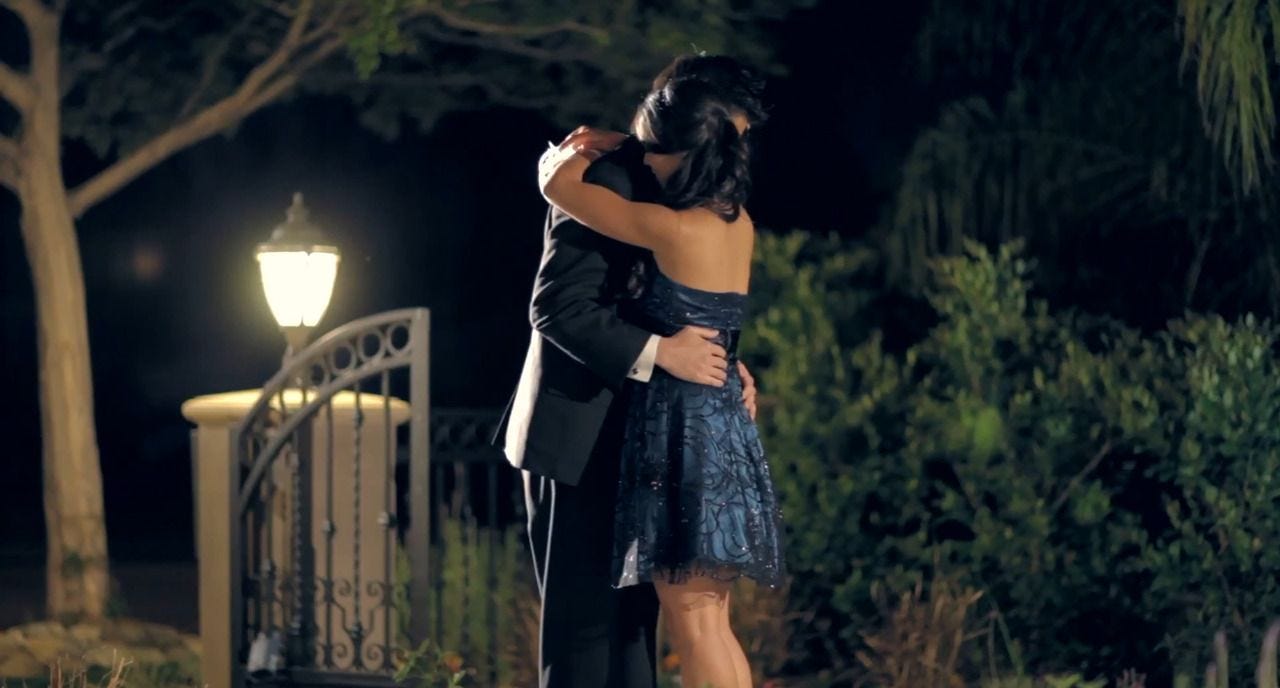
The teacher plays fairly slow, easy-to-follow tango music. After a while, they might add something simple—a couple of steps forward, or a cross. But this will emerge naturally because it’s already embedded in the somatic exercises. When you do those exercises, you’re learning to turn and cross.
I’m not completely against teaching any programmed tango steps, but I wouldn’t teach any of the standard things like the ‘tango walk’, the ‘paso basico’, ‘cruzada’ or ‘voleo’. These are all completely counterproductive and if you learned them you probably want to unlearn most of that for tango milonguero.
Instead, I’d stick to movements that complement the somatic exercises, that are naturally emergent ‘crossing’ (not the standard ‘cruzada’ with the heel leading) movements in front and behind in various configurations. These are the same movements that you see in other vernacular dances like salsa or bachata.
Anything beyond that is counterproductive. Complex patterns will naturally emerge and don’t need to be directly taught. Students will see other people doing something and will try it themselves. They don’t need to stand in a line and follow a teacher for hundreds of lessons.
The Practice Milonga Model
The model I’ve developed is what I call the practice milonga, which could also be a pre-milonga, ie., a milonga for learners before the milonga proper. I don’t want to call it either a practica or ‘practilonga’. These are completely counterproductive.
The current practica/practilonga model says that before you dance at a milonga, you need to practice the steps and figures you learned in the lessons. It’s focused on practicing these mechanical steps. Then people are supposed to learn so-called ‘floor skills’ at the actual milonga—because they have these big movements, but now they need to learn to navigate the floor. And they never do. These people never really learn floor skills as long as they continue doing these big movements, and you get these freakish milongas with dancers doing performances swinging their legs around and elbowing each other. They have to abandon those movements to be able dance at a milonga with any effectiveness without swinging and elbowing.
My concept of the practice milonga is that you have all the elements of the milonga—you use cabeceo, you practice moving in the line of dance—but you don’t practice steps.
Students do the ‘slow dance’, then they move forward in the line of dance, then they go back to doing their slow dance. Their movement vocabulary with a partner will naturally emerge. At the beginning, it’s difficult to get through a whole piece of music just doing slow dance—it can be boring. So you don’t have the rule that you must dance a whole tanda. The rules are fairly flexible in this kind of practice milonga.
The idea is that you can do the slow dance, and then just sit down once you get bored with that. There’s no pressure on students to be doing a lot of movement (which is output). And there’s no pressure to dance either.
Removing the Pressure to Dance
The problem with the whole tango teaching scheme is that the teachers start pressuring you to dance. There’s this constant pressure to dance, and you have to get rid of that.
The point of my practice milonga concept is no pressure to dance. But if you do dance, you do it in the line of dance, you try to use the cabeceo—you try to do it within the rules. However, there’s no pressure to finish the tanda because at the beginning, people might find it challenging. A full four-song tanda is a lot of work, especially for people who are relatively inexperienced.
Basically, the practice milonga is just a very easy milonga with no pressure.
Creating a Comfortable Environment
You should play good quality music so that even if you’re sitting, you’re comfortable. This is why glass surfaces are a problem: if you’re not dancing, being inside a dancing studio with wall-to-wall mirrors or any space with highly reflective surfaces (eg., modernist cafes with large glass walls and tile floors) is acoustically uncomfortable (jarring). I have articles on acoustics on my Substack and everyone should read them.
You want to provide good quality, relaxing sound. If you can do it in a cafe, people could even buy their own wine or something like that. The dancing is not really the focus—but there’s good quality music, and when people feel like dancing, that’s when they dance.