

There are two apparently disparate statements you hear people make about their preferences in tango, and my goal is to show how they are connected:
(1) Tango is the feeling.
(2) The quality of the music at the milonga is a matter of the DJ’s selection, and the selection is more important than the quality of sound.
I’ve heard the first idea stated with little qualification, other than as a criticism of emphasis on steps and dancing skills.
The point seems to be that the important thing in tango is the feeling and not the steps that everyone is practicing in their tango lessons.
The problem is that, while it’s pointing toward an alternative frame of understanding tango, it leaves the tango student to figure out for themselves what this alternative actually means.
In particular, feelings are subjective and have a tendency to change over time and to differ between people.
How do I know whether the feeling I’m having right now is the tango feeling?
And how do I know that what you’re feeling is the same as me?
Without specifying some objective, interpersonal conditions, benchmarks or criteria, the whole thing is up in the air and too ephemeral to be of any use.
I have heard the second idea stated on the occasions when I pointed out the poor sound quality at milongas.
I take the position of audiophiles who invest money and effort in their audio setup in order to improve the quality of the music reproduced in their room.
It’s been a hobby of mine since I was a teenager.
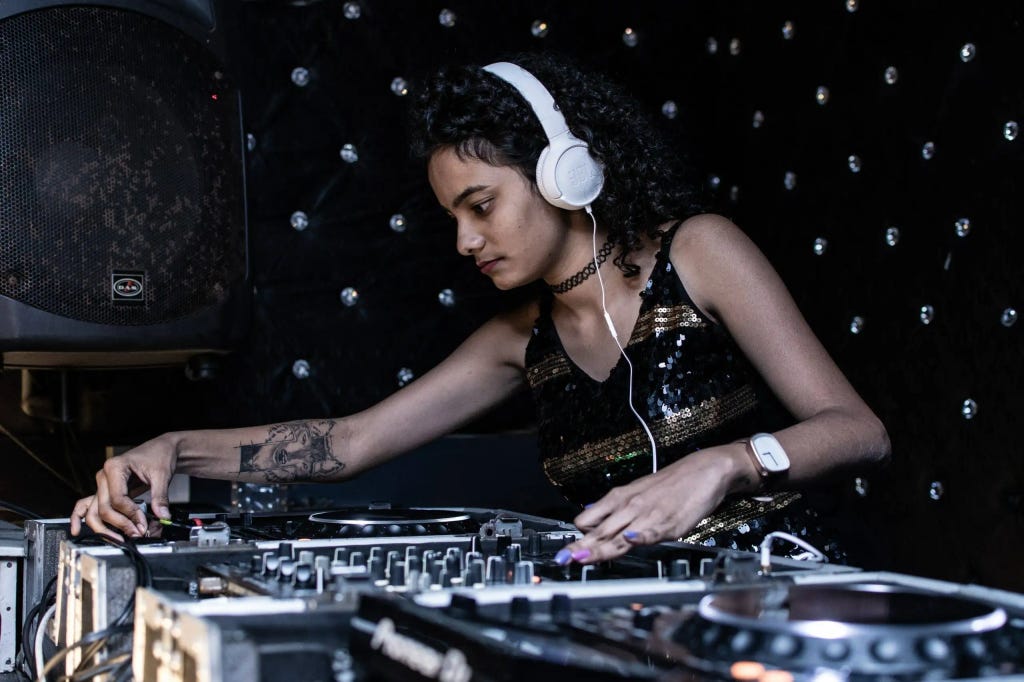
From this point of view, my observation is that the tango DJs market themselves on their selection, but when you look at their gear it’s all cheap, low-end stuff.
Also there is no attention given to the acoustics of the dancing space.
When I point this out, I get a uniform knee-jerk reaction against such talk from the dancing crowd, which is completely incomprehensible to me.
I will persist in making the argument nonetheless.
Music is the language of emotion.
At least that was the view of music for centuries in Europe, and this idea really crystalized in the romantic era spanning early 19th to early 20th century.
If you look at how music evolved, a common context for musical performance early on has been some sort of religious festivity where it was an accompaniment to rituals and community dances, singing or theatrical performances.
European music emerged in the middle ages with the monasteries and Gregorian chants, which were written down, thus creating the system of notating music.
Eventually classical music separated from its purely spiritual or sacred role, and became an object of aesthetic appreciation in itself.
Sacred music became a specialized genre distinct from music for dancing on the one hand, and music for listening on the other.
Nonetheless, music has had these dimensions, the sacred-spiritual, the emotional-aesthetic, and as accompaniment to song and dance.
These aspects were not completely separate, but were fused in various ways.
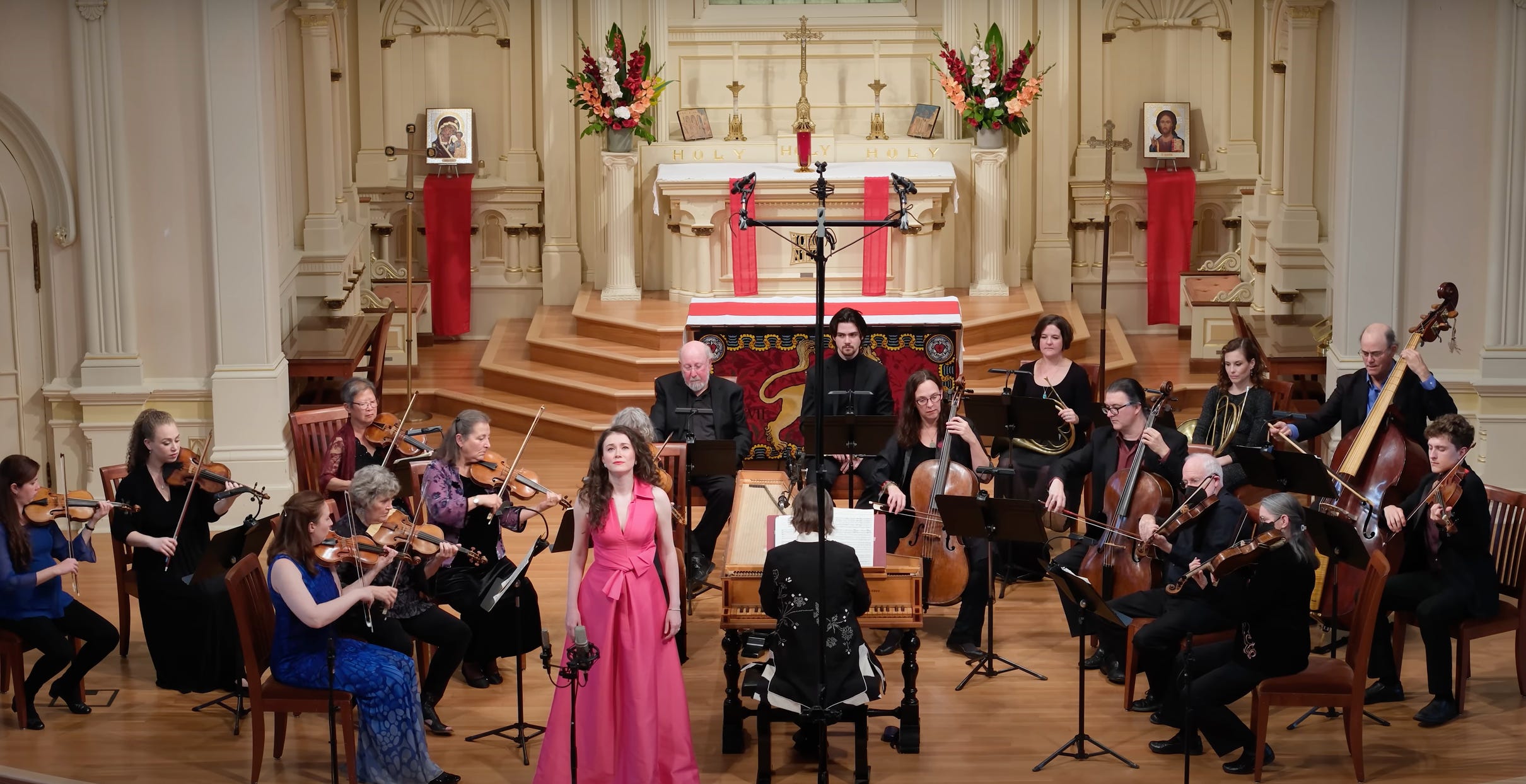
Against this background, saying that ‘tango is a feeling’ suggests that tango music is more than a merely an energetic and rhythmic background to dancing, but that it also has the element of aesthetic appreciation and emotional intensity.
In this, it’s hard not to see the influence of romanticist composers.
The romantics departed from the earlier baroque and classical styles by placing greater emphasis on intense emotion, individuality, and personal expression, seeking to convey feelings such as love, longing, despair, and awe.
They favored more emotionally and songlike melodic lines, and explored more complex, nuanced emotions and emotional shifts within a single piece.
They employed richer harmonies, frequent modulations, chromaticism and dissonance to heighten emotional tension.
In contrast to this, modern music (including pop, electronica and rock) is mainly focused on providing an energetic rhythmic background.
It does share some of the aesthetic features with classical music, like emotive melodic lines and lyrics.
However, the melodic lines, as well as the underlying harmony, are simplified, and if it’s not sappy (80’s style pop and glam rock) it’s pretty much devoid of emotional content (disco, hip hop, rock and electronica).
There is a rhythmic backing, a lot of bass, and a catchy melody line floating on top.
It still has harmonic and melodic features of classical music, but these have been demoted and replaced by technological gimmicks.
Importantly from the point of view of tango appreciation, electrical and electronic instruments and reproduction equipment are not designed to replicate the nuance of acoustic performance that is quite central to the experience of classical music.
If tango music is to be regarded as a vehicle of emotional experience then the point of reference (ie., the objective interpersonal standard, criteria or benchmark) needs to be a live classical performance.
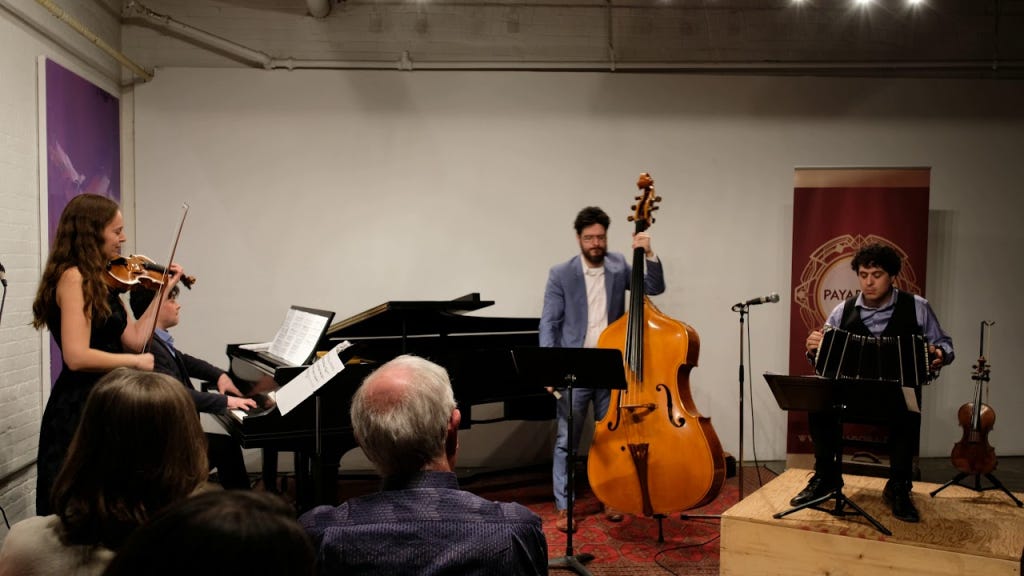
This should be a small to medium size ensemble at least comprised of the piano, violin or two, a bass or a cello, and a solo vocal.
In other words, satisfactory reproduction of tango music from a computer file requires that the person curating the acoustic experience is familiar with the sound of a classical ensemble in a properly sized and designed concert hall.
In particular, the person in charge of curating the auditory experience at the milonga needs to have an ear for that as a result of a certain amount of ‘ear training’.
This is important, because it is now apparent that people in the music reproduction business—including audio equipment designers, performance space managers, as well as the DJs— are not familiar with the sound of live classical music performance.
Instead, they use other criteria for making decisions:
measurements using electronic instrumentation, eg., a flat response curve,
subjective preferences not based on experience with classical music, typically, using the EQ to boost certain frequencies such as the low end,
economic considerations, typically because they wouldn’t know whether the cost of high end audio gear is worth the money.
Because of the assumption and the focus of marketing is that the main skill is choosing the music, and the idea that the music ought to be ‘danceable’—which I can only guess means having rhythm and energy,—the end result is acoustic experience devoid of emotional content.
The equipment used by tango DJs is all cheap low-end stuff.
Also, milongas are often held in empty, highly resonant spaces, with no sound absorption or diffusion of any sort, often low ceilings, often in studios or modernist bars with wall-to-wall mirrors, large windows and glass walls.
I guess people haven’t spent enough time in their soulless corporate offices and need more of that in their social dancing.
The reframe here is that, if you want feeling in tango then music selection is actually the least important element in delivering tango music.
Virtually all tango recordings prior to the 1950s are reasonably transparent, meaning that there was no processing of the sound, and what you’re getting is a fairly direct facsimile of the original performance.
If there is no excessive noise (such as clicks and pops due to the wear and tear on the record), and if the transfer is of good quality, then the tangos will provide an emotionally satisfying experience for the dancers.
However, this will be only if there is an adequate audio set up in an acoustically suitable space.
What you need is the following:
a venue with decent acoustics - reasonably high ceiling, no large smooth and hard surfaces (such as wall to wall mirrors, large windows or glass walls, tiled floors), some absorption and/or diffusion (surfaces that absorb or redirect the sound waves in different directions to soften and mix the sound)
two or more decent quality PA speakers with large drivers (10-12” for medium to large spaces) that are facing both the dancers and the non-dancers
suitably rated power amplifier (100-200w for medium to large spaces)
audiophile grade music player capable of upsampling such as Audirvana Studio
audiophile grade DAC such as Chord Mojo 2 designed specifically for reproduction of classical music from the computer and capable of processing high resolution music files
reasonable quality USB and audio cables
high resolution 16bit (CD quality) or 24bit (Hi-res) music files of high quality transfers sourced from TangoTunes, Qobuz, etc.
What you actually see at these milongas are:
poorly selected venues with awful acoustics (usually dancing studios with wall to wall mirrors, modernist restaurants with glass walls, or white cube art galleries with low ceilings) see Acoustic Experience and Glass Surfaces, and Effects of Reverberation on the Emotional Characteristics of Musical Instruments
speakers that are too small given the size of the space, often facing away from the people sitting who then have to listen to second hand low energy sound with no direct sound at all
underpowered amps too small for the speakers and/or the space, delivering low energy, poorly defined sound
low-end ‘convenient’ music players (iTunes, Traktor, Mixxx) designed for lo fi listening that might sound ok on person headphones but are completely inadequate for sound amplified in a large venue
either no external DAC at all (audio cable plugged directly into the audio jack), DJ gear like Traktor Kontrol designed for processed electronic music, or a USB instrument interface like Focusrite designed for converting from analog into digital for recording onto the computer
cheap cables or bluetooth
low quality mp3 music files
If that is the case, which it is >90% of the time, then you’re pretty much guaranteed the absence of emotional aesthetic satisfaction.
All the different elements compound, in an additive manner, to produce the poorly defined, compressed, low resolution sound.
So you get large rooms (often church halls or function rooms) often with decent acoustics, but add the low resolution signal pumped into underpowered amp/speaker combo you get a low energy ‘mushy’ vibe that puts you to sleep.
Alternatively, you’re in a dancing studio with wall to wall mirrors and low ceilings, or a modernist cafe/cocktail bar with glass walls and tiled floors, which combine with the low resolution laptop setup to give you loud, brittle ‘shouty’ effect that turns you into a raving freak.
Either way, the milonga experience will have the vibe of an aerobic stepping class in a gym, as the participants either struggle not to fall asleep and die of boredom, or the studio setup drives them into a frenzy.
What you really want is the concert hall vibe, where it’s 70% classical honey, and 30% dancing drive.
It follows that, if there is to be feeling in the tango, the focus needs to be on sound quality first and foremost, and only then on the selection and organization of the specific tracks.