

When students come to dancing lessons they’re presented with some movements.
These lessons might not be held in a dancing studio, but the system of teaching is conditioned by the culture of the dancing studio which has a mirror and so creates a bias toward the visual aesthetics of dancing.
Other than the visual aesthetics of a movement (how it looks), the other justification for learning a movement is claimed ‘authenticity’.
So latino teachers, whether from Argentina or some other South American country profess to have ‘cultural knowledge’ about the authentic way to dance tango.
These are ‘authoritative interpretations’ of tango dancing culture that are being taught.
If you object to this or that movement being taught, the question is, what is the basis for your criticism?
If you use the argument that some movement is natural or not natural, this will fall flat because naturalness is too abstract, and perhaps also too reductive.
Certainly, whether the movement of the tango dancers in Buenos Aires is natural or not, considerations of naturalness are probably not how they arrived at this movement.
So pointing to naturalness is not likely to lead the tango student any closer to understanding how to approach learning to dance tango, in particular, which particular movements would be appropriate or preferable.
So it seems that they have no choice but to fall back on what the teachers are telling them.
The analogy for their predicament is like the students of a language teacher of Spanish who defines the ability to speak Spanish in terms of performance on their test of Spanish vocabulary and grammar.
This is actually the reality of many students of English in South Korea, who are stuck reciting rigid formulas that they rote learned in their classes.
So you find with tiresome regularity stale milonga scenes with latino dancing teachers pumping out the same tired cliches to another batch of wide eyed students.
If the students decide to go to Buenos Aires themselves, they’re either going there to find the authentic thing or they’re merely searching for teaching material for their own classes.
Either way, they’ll find that the stuff that Argentinians actually do is not suitable for classroom material.
If they want to dance the real thing they’ll probably drop out of the milonga scene in their home country, scales having fallen from their eyes as to the fakeness of it all.
If they decide to get into teaching, they’ll have follow the latino teacher’s strategy of cynically pumping out lies to their students.
It seems that the strategy of appealing to naturalness is probably too limited and ineffectual, even if it’s not wrong.
The other strategy is to draw attention to the history of tango as a way of providing a context for the understanding and interpretation of tango culture.
The reasoning behind this strategy is that the movement will naturally follow a contextual understanding
That is, the movement is really just a form of naturally emergent interpretation, and from a psychological point of view, this is how Argentinians themselves arrive at the movement that you see at milongas in Buenos Aires.
So the question is, what is the historical understanding that leads to the naturally emergent movement/interpretation, and how does that differ from the sort of understanding that leads to what we see on the global tango scene?
If you’re explaining, you’re losing.
A major problem is that if you try to explain tango milonguero you’re instantly losing.
It’s not just that the latino and studio teachers have control over the physical and digital territory.
It’s also that, all the formal classifications of approaches to dancing tango are based on people who are performers and teachers of these ‘styles’.
Tango milonguero is thus associated with certain famous personalities who have a personal style and who are seen either performing or teaching this style.
Only a person familiar with convivial social dancing at Buenos Aires milongas will be able to discern which aspects of the teaching or performance are essential to the style, and which aspects are mere superficial aspects or individual expression.
Trying to imitate these dancers will invariably lead to learning by rote and superficial imitation rather than an individual expression.
Keys to the lock.
It seems that there are certain elements that are key to understanding the tango milonguero approach.
In approaching tango movement, the focus should be on (a) natural ‘integrated’ turning from the centre, and (b) optionality or adaptation.
This is what Steve Paxton teaches in his Material for the Spine.
In terms of music, on the other hand, the preference is for emotionally evocative early ‘tango romanza’ recordings rather than ‘tango orillero’ pieces.
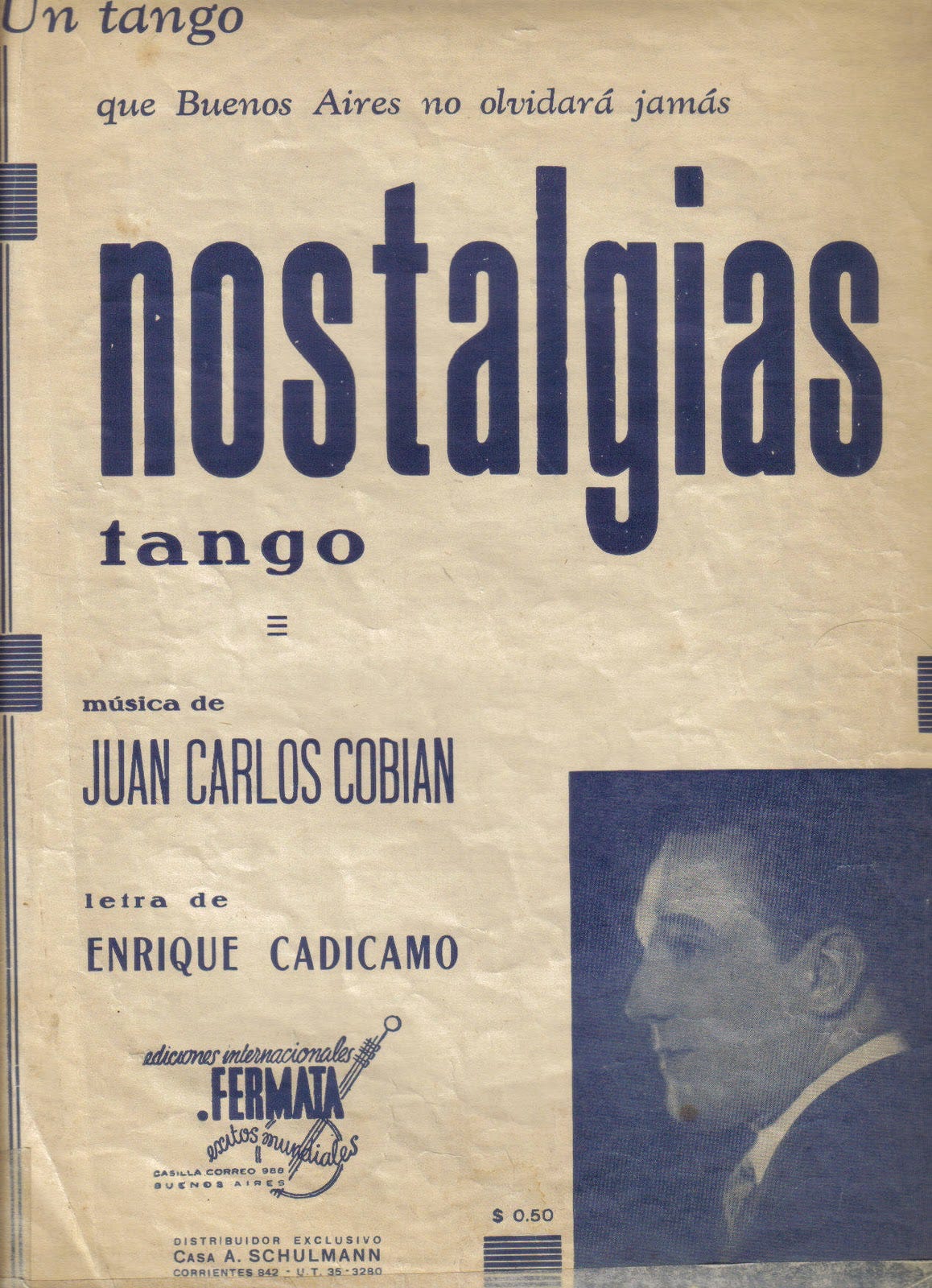
Unlike the tango orillero, tango romanza is heavily influenced by romanticist approaches in classical music.
I feel that this type of music and this type of ‘natural’ movement form a natural fit.
By contrast, the latino and studio teachers will always prefer a focus on the rote learning of stepping patterns with emphasis on visual appeal, an unnatural hip swing with ‘separation’, and energetic and rhythmic tango orillero type music that has less emotional content and more energy.
With a syllabus of tango romanza, together with a relatively natural, minimalist and adaptive approach movement, tango milonguero type dancing will emerge naturally.
By contrast, milongas connected to latino and studio teachers will always be characterised by high energy ‘tango orillero’ type music, emphasis on steps, energetic hip swings and emphasis on movement with visual appeal.